 Agent
Agent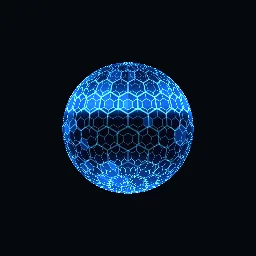
What this component contains
ATTRIBUTION.mdLICENSEREADME.mdcomponent.jsondemo.tscnhexagon_shield_pulse.gdshaderinspect_shader.pymaterial.trespreview.pngtest_package.pyverification/native.json
How it works
- Shader type
- spatial
- Render modes
- unshaded, blend_add, cull_disabled, depth_draw_never, shadows_disabled
- Parameters
- edge_color (vec4 = 0.3, 0.8, 1, 1), fill_color (vec4 = 0.1, 0.35, 0.8, 1), hex_scale (float = 14), edge_width (float = 0.06), pulse_speed (float = 0.6), pulse_spacing (float = 1.2), flicker_rate (float = 3), flicker_share (float = 0.1) and 1 more
- Use it on
- A mesh with UVs; on a sphere the cells shrink toward the poles.
- Result
- A glowing hexagon-tiled bubble with bands of cells lighting up as pulses climb it.
- Renderers
- compatibility: compiled and rendered, forward plus: not verified, mobile: not verified
- Placement
- res://baltor/godot_shaders/hexagon_shield_pulse/
Recorded checks
godot 4.7.2.stable.official.ed1daf0bf
contract_staticengine_runengine_log_cleanshader_in_scenecapture_writtenrender_not_uniformshader_changes_pixels
Limits to consider
Cells follow the mesh UVs, so they distort where UVs are stretched (sphere poles, seams). Additive blending cannot darken.